Garage Floor Coatings
Slab condition · tires · storage · cleaning
Full-broadcast flake, solid-color, and other coating systems designed around vehicle use, storage, cleaning, and the existing slab.
Related directionFull-broadcast flake
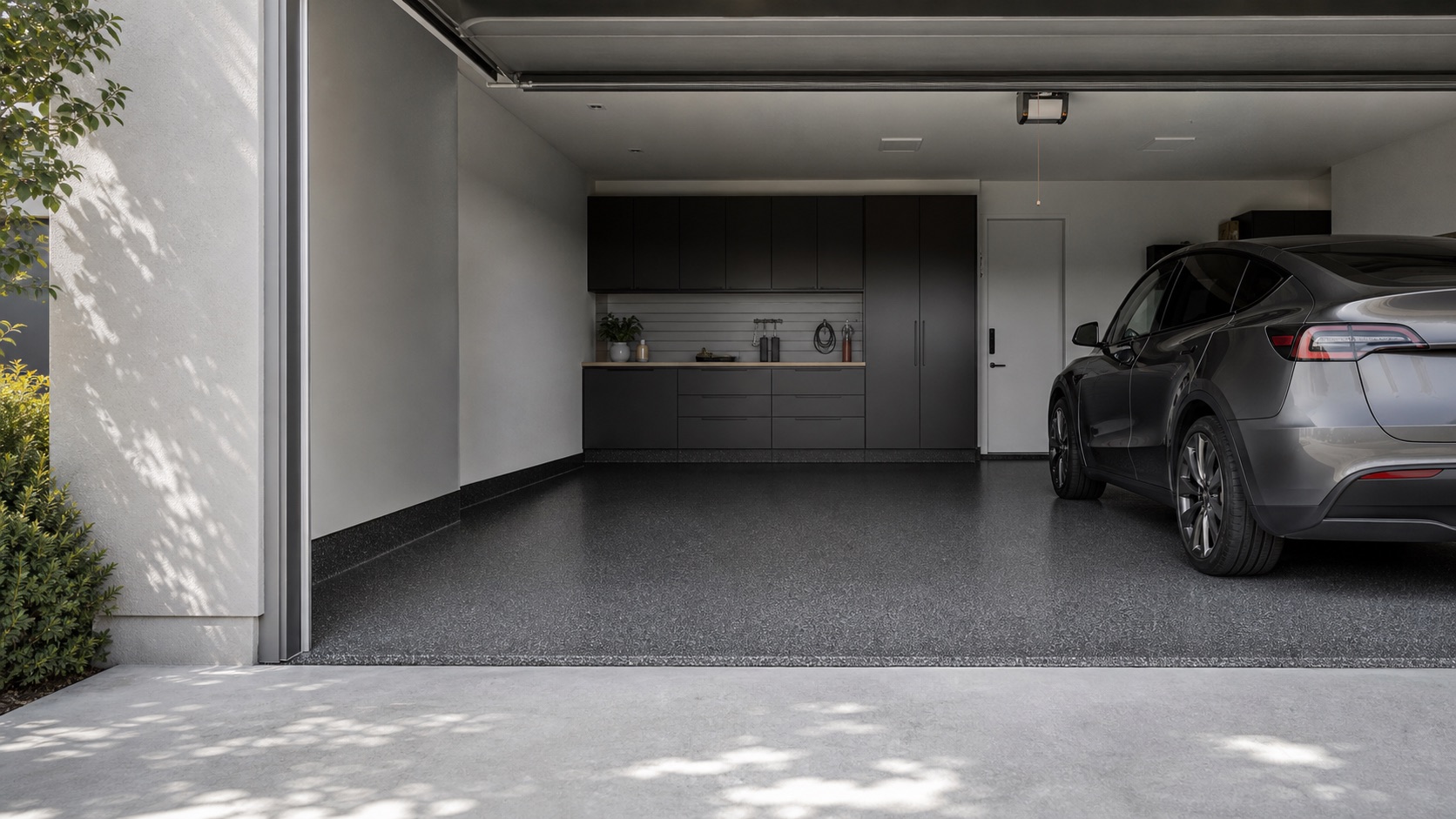
Concrete coatings · San Diego
Garage floors, patios, commercial concrete, and custom epoxy surfaces installed across San Diego with serious preparation and clean, considered finishes.
System study / 01
Position / 01
Concrete is the starting point.
The visible finish gets the attention, but the condition of the slab, surface preparation, repairs, environment, and intended use determine what system should be considered. Tideform starts there.
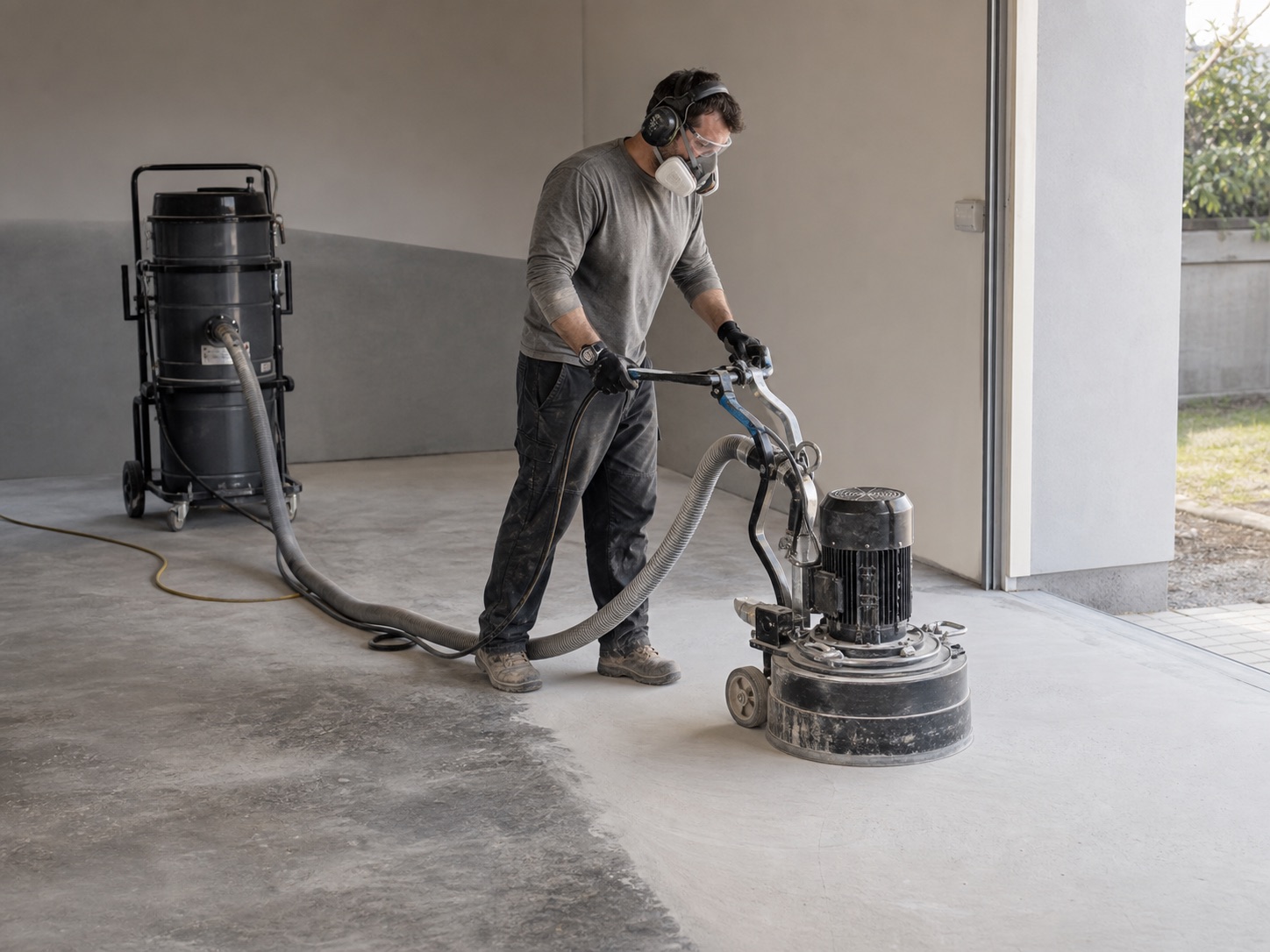
Preparation / Profile
Mechanical preparation is not a decorative prelude. It is where the slab is opened, assessed, cleaned, and made ready for the system being considered.
Project planner / 02
Four quick choices shape a better first conversation. This is guidance for discussion, not a specification or quote.
Step 01 / 04
Not every concrete surface needs the same system.
Services / 03
A coating system should be selected, not simply sold. Each project begins with how the surface will be used.
Slab condition · tires · storage · cleaning
Full-broadcast flake, solid-color, and other coating systems designed around vehicle use, storage, cleaning, and the existing slab.
UV exposure · traction · drainage · heat
Exterior concrete finishes selected with exposure, texture, drainage, heat, and surrounding use in mind.
Traffic · return to service · maintenance · access
Coating systems for showrooms, service spaces, studios, utility areas, and active workspaces.
Light · transitions · furnishings · cleaning
Decorative concrete and epoxy finishes for studios, entertainment rooms, utility areas, and modern interiors.
Variation · gloss · lighting · visual movement
Custom decorative finishes with controlled movement, depth, and color variation.
Substrate · edges · heat · scratch tolerance
Custom epoxy or resin finishes for bars, utility counters, workshops, and selected residential surfaces.
Adhesion · contamination · removal · repair
Assessment of peeling, worn, damaged, or outdated coatings before repair or replacement options are discussed.
System anatomy / 04
Explore simplified cross-sections. Real specifications vary by product, slab, environment, and use.
Selected for use, texture, and maintenance
Decorative flake distributed into the wet layer
The receiving layer for the broadcast
Selected cracks, spalls, edges, and joints
A profile matched to the proposed materials
The actual system depends on the slab, environment, intended use, and selected materials.
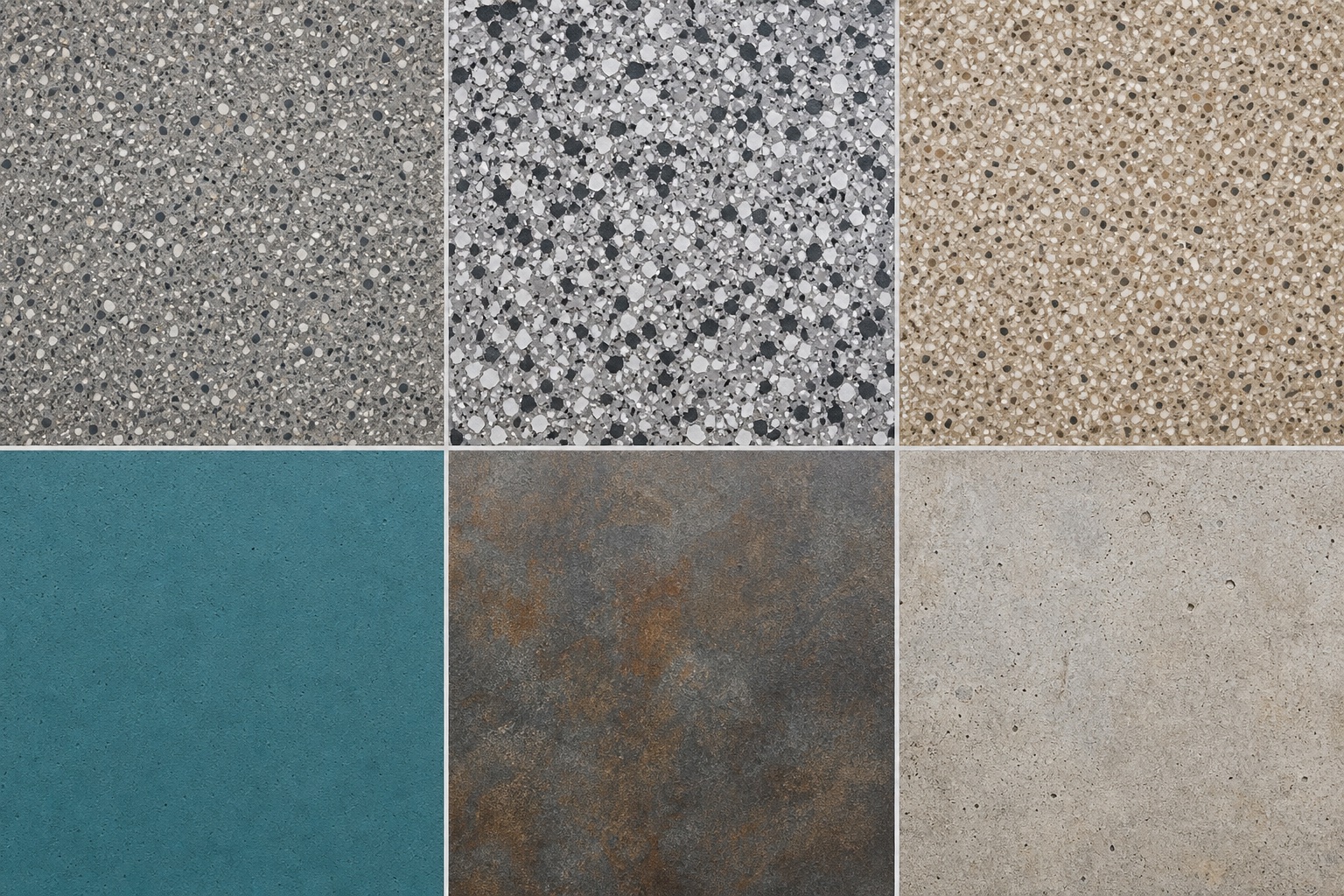
Finish library / 05
Original, unbranded directions to make early conversations more visual. All shown as concept finish samples.
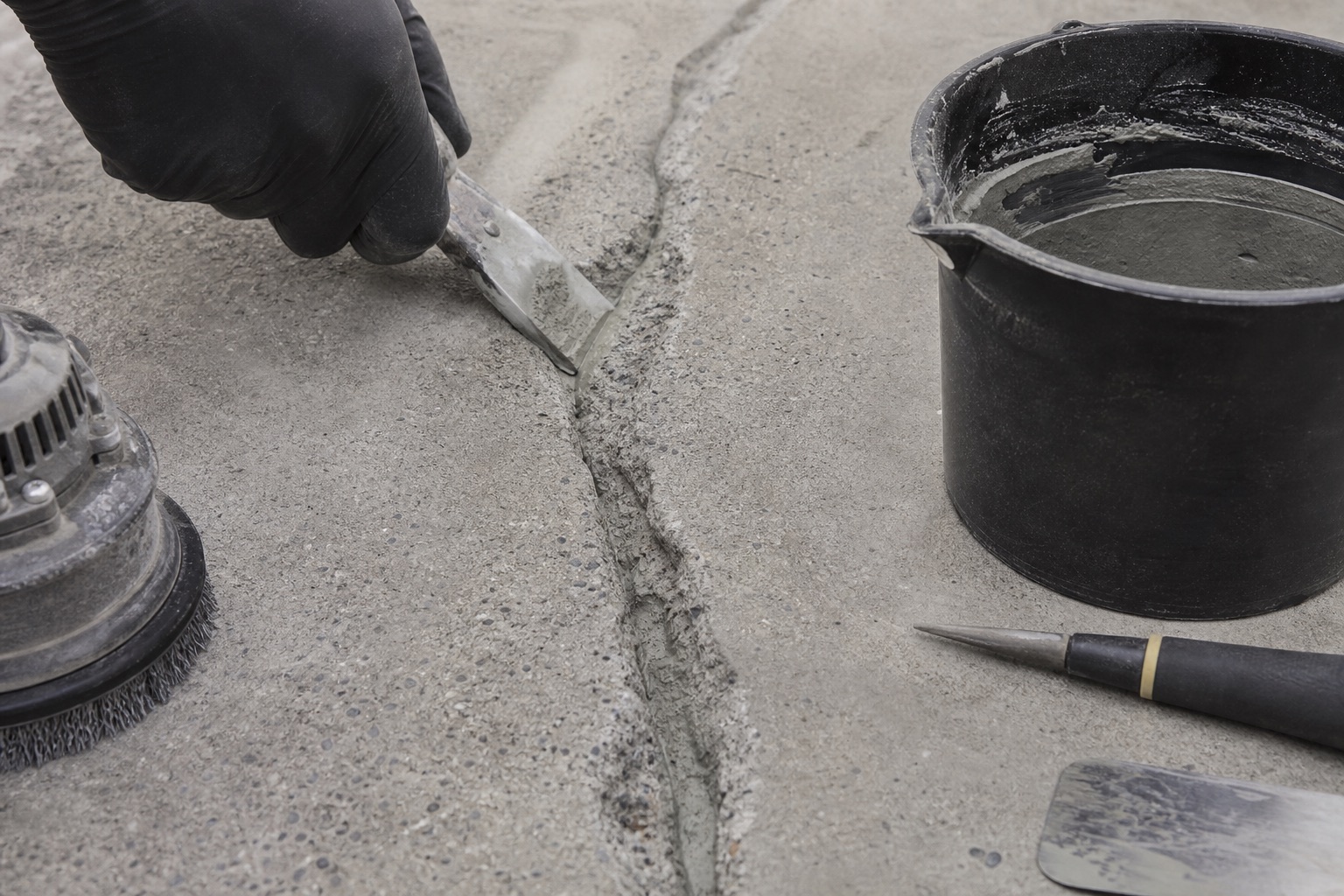
Preparation process / 06
Review the concrete, existing coatings, visible damage, access, environment, and intended use.
Mechanically profile the surface using preparation methods appropriate to the proposed system.
Address selected cracks, spalls, joints, edges, or surface defects as appropriate.
Apply the selected coating layers using the planned broadcast, decorative, or solid finish.
Review the completed surface, edges, transitions, texture, and care guidance before handoff.
Material note Concrete can continue to move after repairs. No coating system can guarantee that every crack or substrate issue will never reappear.
Project gallery / 07
Sample project visualizations created to show finish, environment, and use—not completed client work.
Sample project visualization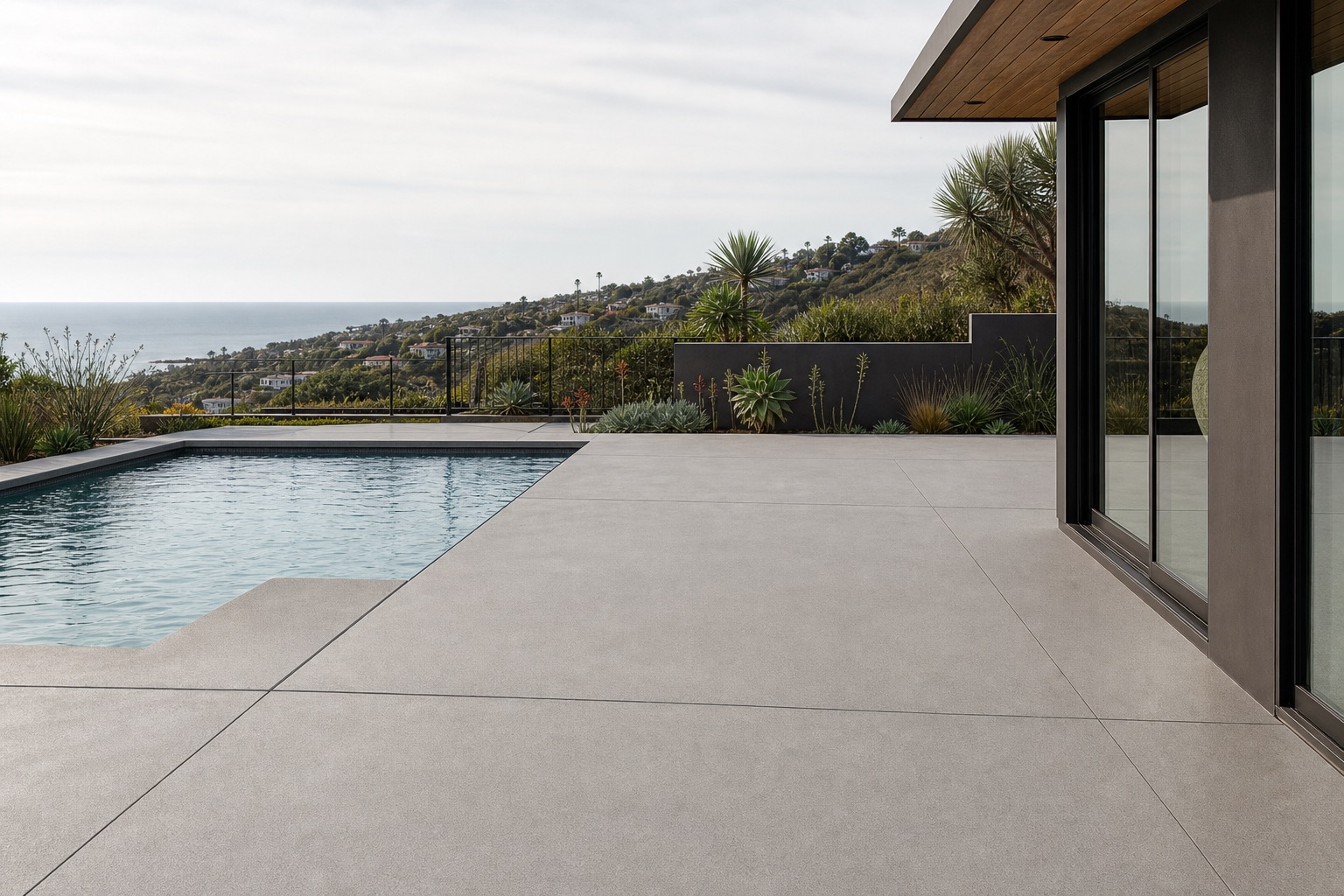 Sample project visualizationSample project visualization
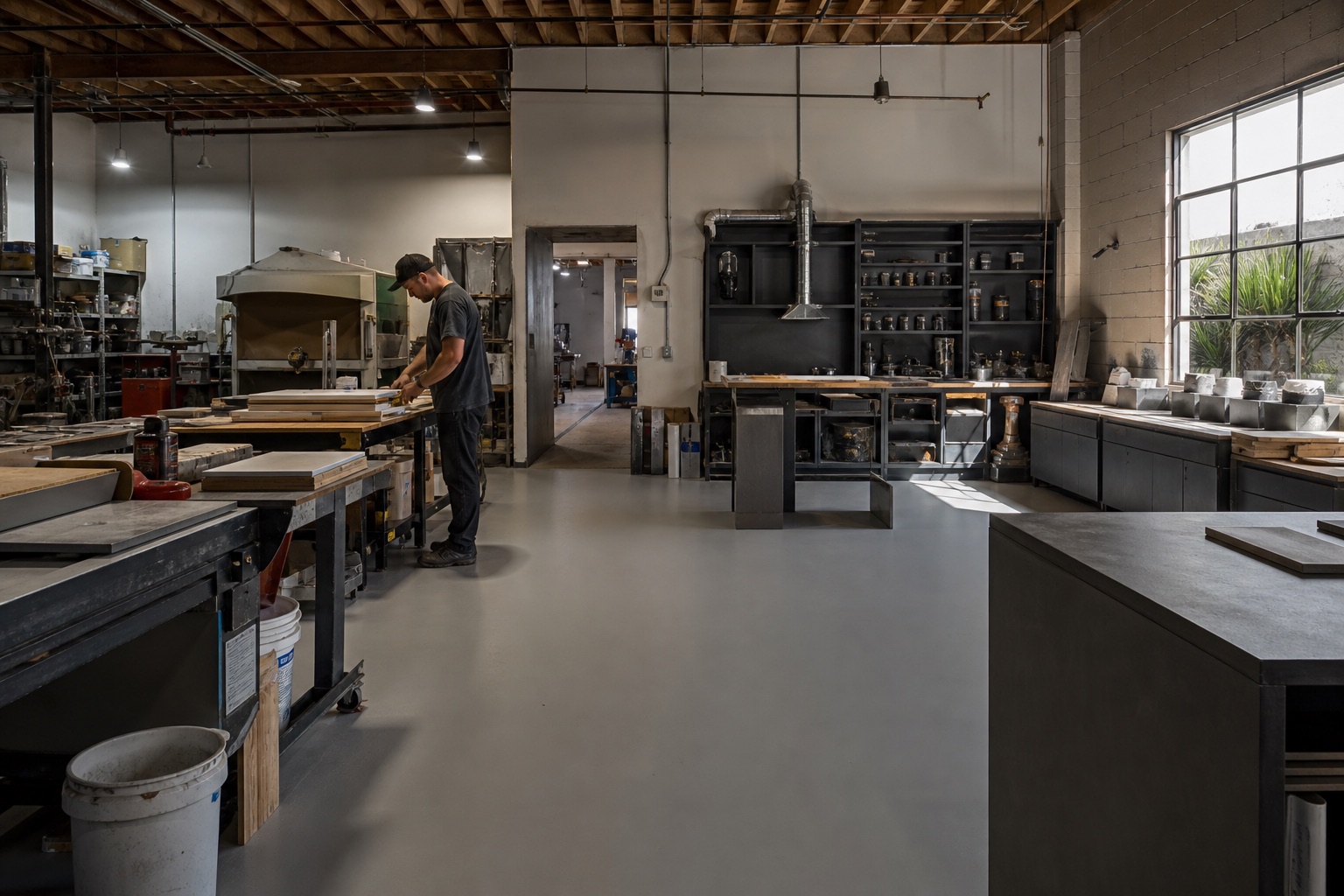 Sample project visualization
 Sample project visualization
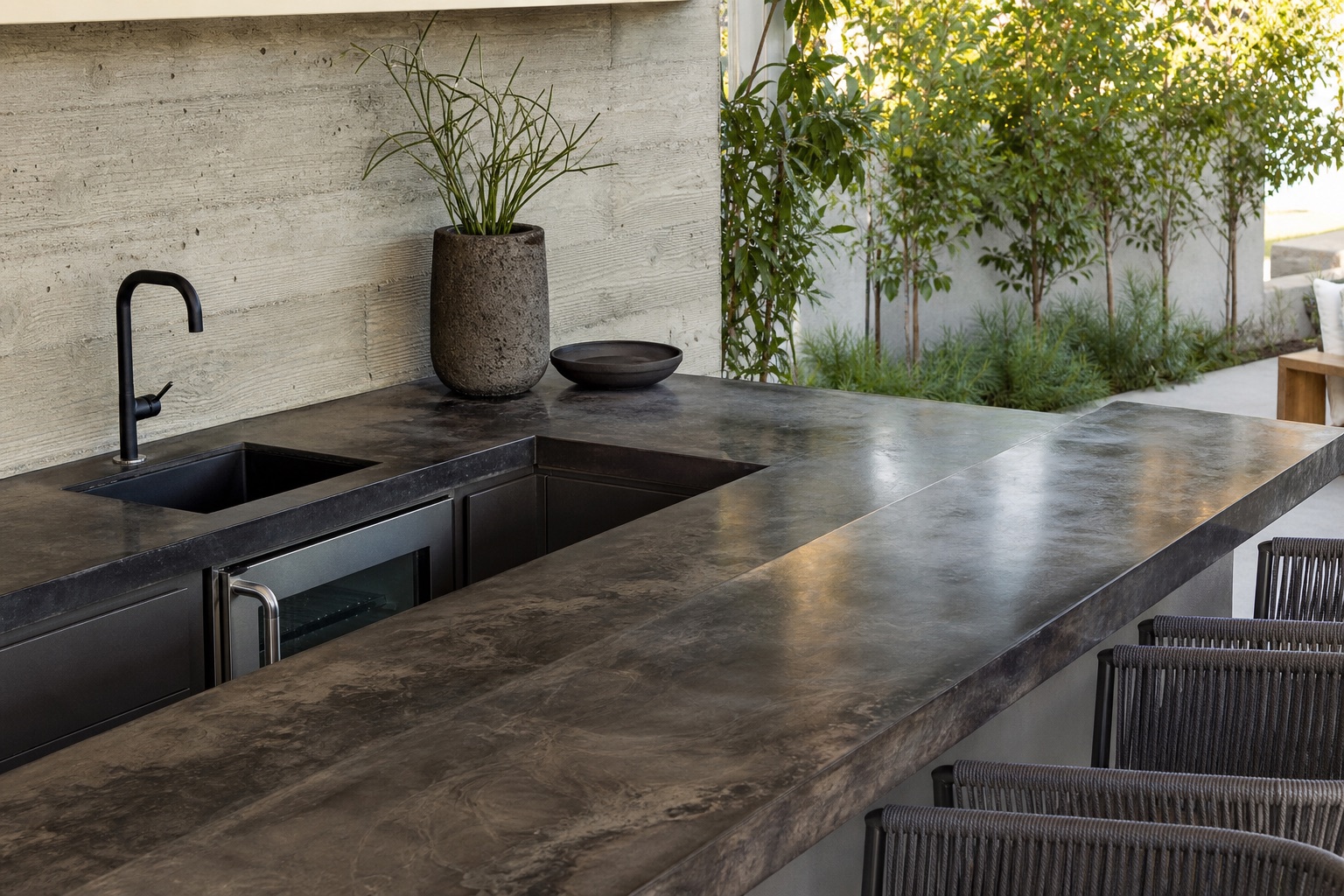 Sample project visualizationSample project visualization
 Sample project visualization
Use cases / 08
Environment changes the questions. The finish follows.
Garages, utility rooms, workshops, entertainment rooms, and selected interior spaces.
Cleaning, appearance, transitions, vehicle use, and how the room connects to the home.
What is stored here? How often is the space cleaned? Is the slab cracked, stained, or previously coated?
Full-broadcast flake, solid color, natural concrete, and selected decorative systems.
Field notes / 09
A failure rarely has one universal cause. A site assessment helps determine whether the existing concrete and project conditions are appropriate for the proposed system.
Inadequate surface preparation
Coating over contamination
Moisture or substrate conditions
Incorrect system for the environment
Poor edge and transition treatment
Insufficient repair planning
Exterior exposure
Rushing cure or return-to-service timing
Applying over an unstable existing coating
Custom surfaces / 10
Custom resin and epoxy finishes can create expressive work surfaces. Suitability still begins with the substrate, edges, environment, and intended use.
No finish is universally food safe, heat proof, scratch proof, or suitable for every existing counter. Those questions depend on the selected product and project conditions.
Service area / 11
Residential, commercial, exterior, and custom-surface conversations throughout the county.
Project availability is confirmed based on location, access, scope, and scheduling.
Sample voice / 12
Illustrative testimonial content for this fictional portfolio concept.
“The estimate was clear about what the floor needed before the coating could even begin. That made the whole project feel more trustworthy.”
“The garage finally feels like part of the house instead of an unfinished storage space.”
“What stood out was the preparation and attention to the edges. Nothing felt rushed.”
FAQ / 13
Every slab tells us what the system needs. These answers are a starting point; product and project conditions still matter.
They are different resin chemistries with different working, cure, appearance, and performance characteristics. Products vary, and the right discussion depends on the slab, environment, schedule, and intended use.
Start with the concrete, exposure, access, intended use, desired finish, cleaning expectations, and schedule. A system should be selected after those conditions are understood.
Preparation creates the condition a selected coating needs to bond. Mechanical profiling also reveals contamination, damage, weak material, and transitions that may need a plan.
Sometimes, but the existing material and its adhesion must be evaluated. A peeling, incompatible, contaminated, or unstable coating may need to be removed.
A coating cannot stop all concrete movement. Selected cracks may be repaired, but movement can continue and a crack or joint can become visible again.
It depends on the system, slab condition, repair needs, access, weather, and cure requirements. A project-specific sequence should be explained before work begins.
Return-to-service timing depends on the selected materials, temperature, humidity, intended load, and system requirements. The project plan should state those limits clearly.
Texture, contamination, footwear, water, and maintenance all affect traction. More texture can aid traction but may change cleaning, so the balance should be discussed.
Some exterior concrete may be a candidate. UV exposure, moisture, drainage, heat, texture, movement, and the selected materials all require consideration.
No. Suitability depends on the substrate, edges, existing finish, intended use, heat exposure, scratch tolerance, product selection, and installation environment.
Share the location, approximate size, current condition, intended use, desired look, access notes, and clear photos of the whole surface, edges, cracks, drains, and existing coatings.
Tideform Surface Co. is a fictional portfolio concept created to demonstrate website strategy, design, and development for a concrete coating business.
Project estimate / 14
A few details and clear photographs can make the first conversation much more useful.